
Video content is everywhere now, and every business, every creator, and every small brand is expected to post video somewhere. But not everyone has the time or the budget to learn a full editing programme, and that is the special problem creators are facing today. On the one hand, video is the format that gets the most attention. On the other hand, editing software has always felt like a wall you have to climb before you can even start. Browser-based video editing is changing that. It removes the setup, the installation, and the learning curve and lets people start editing the moment they open a tab.
The Old Barrier to Making Video Content
For years, editing a video meant installing something first. You had to download the software, wait for it to install, then spend hours just figuring out where anything was.
Timelines, layers, and effect panels – none of it made sense on day one. Small creators and small businesses often gave up before they even finished their first edit.
This is even more true for people managing everything themselves: marketing, customer replies, and content all at once. Adding a complicated piece of software into that mix was simply too much.
Why the Browser Changes Everything
A browser-based editor removes the biggest barrier immediately. There is nothing to install. No waiting for downloads. No worrying if your laptop can handle the software. No learning a brand new interface before you can even open a video file.
You just go to a website, upload your footage, and start.
This alone makes video editing accessible to people who would have avoided it completely before. Tools like invideo editor are built around this shift by making professional editing workflows available directly through the browser, allowing creators to focus more on making content rather than managing software setups.
- No installation required
- Works on any computer or phone
- No prior editing knowledge needed
- Nothing to update or maintain
For small creators, this matters a lot. Time is limited, and every extra step is a reason to give up.
Everyday Edits Made Simple
Most people do not need a complicated edit. They need to cut a clip, add some music, fix shaky footage, or clean up bad audio. Browser-based editors are built exactly for this.
You do not need to understand colour grading or advanced transitions to fix the basics. Cutting a clip down, adding a caption, adjusting a scene – all of this can now be done directly inside the browser without touching a single technical setting.
This is the part that makes the biggest difference for everyday creators. Most video problems are small problems, and small problems should not need big software. Modern editors such as invideo editor are helping simplify these everyday tasks by bringing essential editing features into a more accessible workflow that does not require advanced technical knowledge.
Giving Instructions Instead of Learning Buttons
One of the newer shifts in browser editing is how people actually make changes.
Instead of hunting through menus, people can now type what they want changed and watch it happen. Want a different style. Want to swap out a piece of footage. Want to change a scene.
You describe it in plain language, and the tool applies it. This removes the second biggest barrier after installation, which is learning where every button lives.
You are no longer memorising an interface. You are just saying what you want.
When the Browser Becomes the Editing Workspace
Plain language instructions are only part of the picture. The move to browser-based editing becomes more useful when creators can do more than basic cuts without returning to desktop software. A browser can now support much more of the editing process, from working through raw footage to refining an editable timeline.
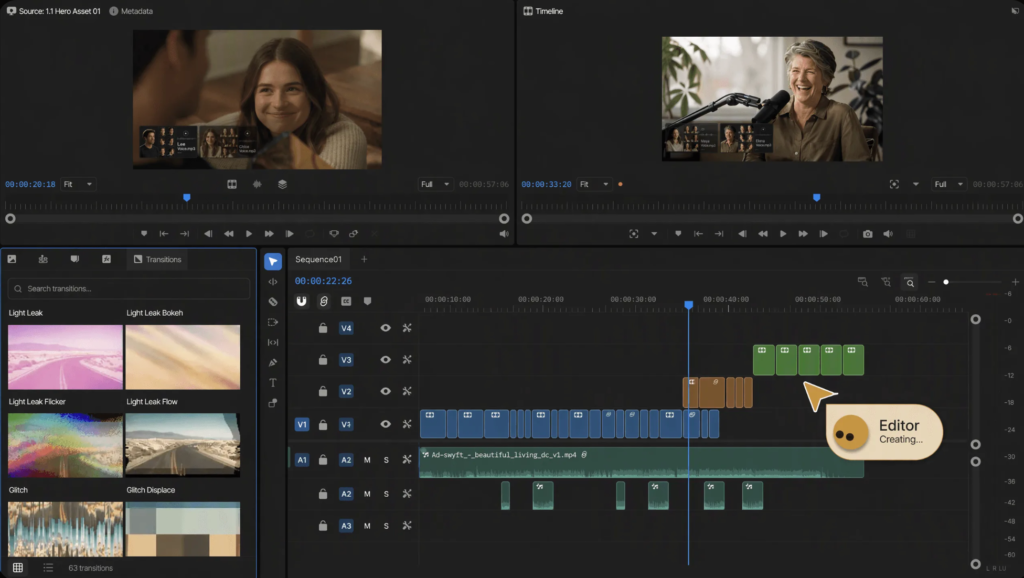
Invideo editor brings a professional editing timeline and AI editing agents into the same browser-based workspace. Creators can upload raw footage, work directly on the timeline, and give agents editing tasks such as reviewing footage, selecting usable takes, removing repetition, and assembling a base cut.
Since the whole workflow stays in the browser, creators can edit videos online by cutting clips, adding music and captions, improving shaky footage or poor sound, or describing changes in plain language. The project remains editable throughout, so creators can inspect what the agent has done, redirect the work, and continue refining the video themselves.
This makes browser editing useful beyond quick fixes. It can support the larger process of moving from raw footage to a finished video without tying that work to installed software.
Who Benefits the Most From This Shift
With this much of the editing process now possible in the browser, it is worth looking at who actually gains the most from it. Not everyone editing video is a professional editor.
Creators recording long videos with a lot of repeated takes benefit hugely, since a lot of the boring review work can be handled without watching every second manually. Small business owners posting product videos benefit too, since they can make quick edits without hiring someone or learning software just for occasional use.
Teams working together on the same project also benefit, since everything lives online instead of being stuck on one person’s laptop. Basically, anyone who wants a real result without becoming a full-time editor first is the audience for this shift. For these users, tools like invideo editor show how browser-based workflows can support more than basic edits, helping creators handle larger projects while keeping the editing process manageable.
Common Mistakes to Avoid
Even with easier tools, a few habits still cause problems.
- Skipping a final review before publishing
- Relying only on instructions without checking pacing
- Ignoring platform-specific formats when exporting
- Assuming automation replaces every creative decision
Browser-based tools remove the technical barrier, not the judgement part. You still decide what the final video should feel like.
Where This Is Heading
Video editing used to be something only trained editors could do well. That is changing fast. As browser-based tools keep improving, and as giving plain language instructions becomes normal, more people will be able to produce videos that used to require a specialist. This does not remove the need for creativity. It just removes the technical wall that used to sit in front of it.
Conclusion
Browser-based video editing has quietly removed one of the biggest barriers to making content.
No installation, no complicated learning curve, and increasingly, no need to even learn where the buttons are.
For small creators and small businesses trying to keep up with how much video content is expected of them, this shift matters.
It means more people can actually make the video they were putting off, without a production team and without a steep learning curve standing in the way.