
Creating videos has become easier than ever. Cameras are better, editing tools are more accessible, and creators can publish content across multiple platforms within minutes.
But editing is still where most of the time disappears.
Recording a video may take an hour, but turning that footage into a finished piece can take much longer. Creators often spend hours reviewing clips, finding the best moments, removing mistakes, adjusting pacing, fixing audio, and creating different versions for different platforms.
The challenge is not only making a video look better. It is managing all the small tasks that happen before the creative decisions can even begin.
This is where smarter editing workflows are helping creators save time without lowering the quality of their final videos.
Why Video Editing Takes More Time Than Expected
Most creators do not struggle with recording content. They struggle with everything that comes after.
A single recording can create dozens or even hundreds of clips. A podcast episode may contain hours of footage. A product shoot may include multiple takes of the same scene. A tutorial may require removing pauses, mistakes, and sections that do not add value.
Before the final edit is ready, creators usually need to:
Review large amounts of footage
Find the strongest takes
Remove unnecessary sections
Arrange clips into a logical sequence
Improve audio quality
Create different versions for different platforms
These tasks are important, but many of them are repetitive. They take time away from the creative decisions that actually shape the final video.
The Difference Between Editing Faster and Editing Better
Saving time in editing does not mean removing important steps.
A faster workflow should not mean rushing through the process or accepting a lower-quality result. The goal is to reduce the time spent on repetitive work while keeping enough control over the creative parts.
The most important editing decisions still come from the creator.
Creators decide:
Which story the video should tell
Which moments are worth keeping
What tone the video should have
How the final result should feel
The challenge is finding a better way to handle the preparation work that happens before those decisions.
How AI Is Helping With Repetitive Editing Tasks
AI is changing video editing by helping creators handle parts of the workflow that previously required a lot of manual effort.
Instead of only adding effects or improving individual elements, newer AI-powered workflows can assist with larger parts of the editing process.
For example, AI can help creators:
Understand and organize footage
Identify useful sections from long recordings
Remove repeated parts and unnecessary content
Prepare an initial structure for the edit
Create different versions from existing content
This does not replace creative direction. It helps creators spend less time managing footage and more time refining the final video.
Moving From Manual Editing to Assisted Workflows
Traditional editing requires creators to perform every step themselves.
They need to watch every clip, decide what stays, manually arrange footage, and build the first version of the timeline before they can start polishing the video.
AI-assisted workflows change this process by allowing creators to give direction and let technology handle more of the execution.
The creator still guides the project, but the workflow becomes less about completing every small action manually and more about making decisions at the right moments.
This is especially useful for creators working with:
Long-form videos
Interviews and podcasts
Multiple camera recordings
Content that needs multiple versions
Videos with repeated takes
How Invideo Editor Helps Creators Handle More Editing Work
A major challenge in video editing is managing the repetitive work without losing control over the final project.
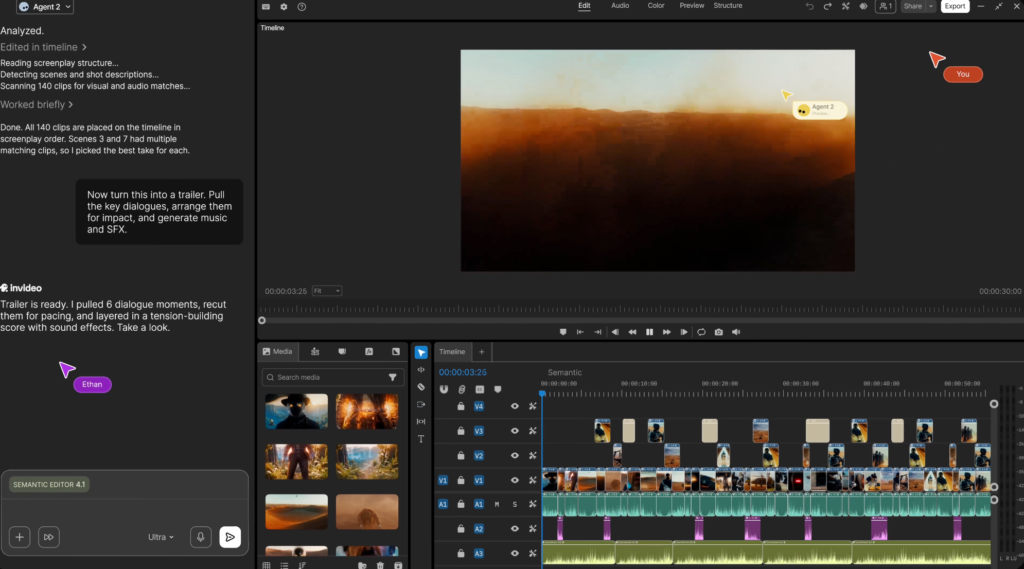
Invideo editor combines a professional editing timeline with AI editing agents that creators can assign real editing work to. The workflow allows creators to upload their footage, provide direction, and let agents handle time-consuming tasks such as reviewing material, selecting usable takes, removing repeated sections, and preparing an editable base cut.
The important part is that the work stays inside the editing project. Creators can review every change, adjust the timeline, redirect the process, or continue refining parts manually whenever needed.
This makes it easier for creators to manage larger amounts of footage, and invideo editor supports a workflow where AI helps with execution while creators remain responsible for the creative decisions.
The goal is not to hand over the entire editing process. It is to reduce the repetitive steps that slow production down.
Why Keeping Control Still Matters
One concern many creators have with AI-assisted tools is losing control over their content.
A good editing workflow should not turn creative decisions into automatic outputs. Instead, AI should support the person making the video.
Creators still need to decide:
Which clips work best
How the story should flow
Where the video needs changes
What the audience should experience
AI can help prepare the material, but the final direction remains with the creator.
This balance allows creators to work faster without making their content feel generic.
Building More Content Without More Editing Time
The demand for video content continues to grow.
A creator may need a full YouTube video, short clips for social platforms, promotional versions, and different edits for different audiences from the same recording.
Creating each version manually can quickly become overwhelming.
A more efficient workflow allows creators to reuse existing footage and adapt it faster. Instead of spending most of the time preparing content, creators can spend more time improving the parts that make each video unique.
For small teams and independent creators, this can make a significant difference.
The Future of Faster Video Editing
Video editing is moving toward workflows where creators do not have to choose between speed and quality.
The future is not about removing human creativity from the process. It is about reducing the repetitive work that prevents creators from focusing on the creative decisions that matter.
As AI becomes more capable, creators will have better ways to manage footage, build first drafts, and refine content while keeping control over the final result.
The best editing workflows will combine human judgement with AI assistance, allowing creators to produce more videos without compromising the quality of their work.


